AI Dotwork Tattoo Generator
Thousands of individual dots creating intricate patterns and shading. Dotwork tattoos are meditative, precise, and visually mesmerizing.
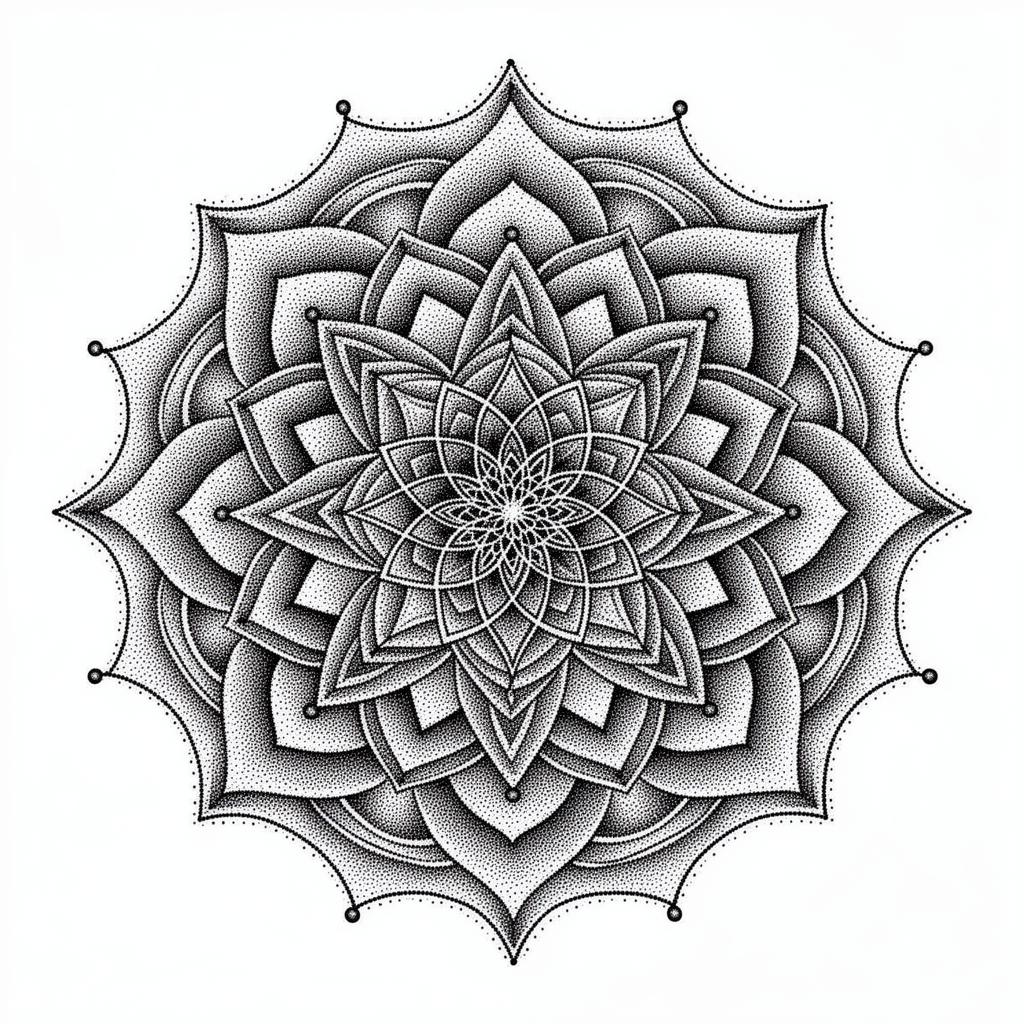
Dotwork tattooing is the art of building images from thousands of individual dots. Rather than using needles to draw lines or fill solid areas, dotwork artists tap each dot into the skin one at a time, varying density to create gradients, shading, and texture. The technique connects modern tattooing to ancient stippling traditions found in pointillist painting, engraving, and decorative illustration — but applied to skin, it produces a distinctive aesthetic unlike any other tattoo style.
The style's modern revival traces back to French and Eastern European artists in the 2000s — Xed LeHead, Tomas Tomas, Thomas Hooper — who treated dotwork as fine art rather than technique. Their pieces combined sacred geometry, ornamental patterns, and dotwork shading into compositions that read as both ancient ritual and contemporary design. From there, dotwork spread globally and became a defining technique in geometric tattooing, ornamental work, and stippled illustration.
What makes dotwork compelling — beyond its visual character — is the discipline it requires. A dotwork piece is built dot by dot, often over thousands of individual taps for even small designs. Artists develop almost meditative working states, and the slow precise pace makes dotwork sessions feel different from line-based tattooing. The finished work has a unique quality: areas of dense dots read as solid black, sparse dots read as soft grey, and gradient transitions emerge from the changing density. The result is tattoo art that genuinely captures texture rather than imitating it. Explore stippled compositions with our AI tattoo design tool before sitting for the real thing.
The Discipline of Dotwork
Built Dot by Dot
Each dotwork tattoo is constructed from thousands of individual taps, each placed deliberately. Even small pieces can require 20,000+ dots. The pace is slow, deliberate, and unforgiving of careless work.
Density Creates Tone
Dotwork shading works through density variation — dense clusters of dots read as dark, sparse arrangements read as light, and the gradient between them creates the illusion of smooth tonal transitions.
Texture Through Stippling
Dotwork captures genuine texture rather than imitating it. The granular surface of stippled shading reads as actual texture in a way that smooth gradient shading doesn't, giving dotwork pieces a tactile quality.
Meditative Process
Both artist and collector often describe dotwork sessions as meditative. The slow rhythm of individual taps creates a different sensory experience than continuous-line tattooing — many find it calmer and easier to endure.
Popular Dotwork Designs
Dotwork's stippled aesthetic suits subjects where texture, gradient, or pattern matter more than crisp linework. Certain themes have become signature dotwork compositions.
- Sacred Geometry
- Mandalas, Flower of Life, Metatron's Cube, sacred polygons — geometric forms shaded entirely with dotwork. The most defining dotwork category.
- Ornamental Patterns
- Decorative borders, lace-like patterns, henna-inspired designs, and Mehndi-influenced compositions built from layered dotwork shading.
- Dotwork Mandalas
- Mandalas where every shaded area is built from individual dots, creating textural depth that flat shading can't match. Often combined with linework borders.
- Stippled Animals
- Animals — wolves, owls, lions, deer — rendered with dotwork shading creating photographic gradient transitions in pure stippled form.
- Botanical Dotwork
- Flowers, leaves, and botanical illustrations shaded entirely through dotwork — capturing the soft tonal gradients of vintage botanical engravings.
- Cosmic and Celestial
- Galaxies, nebulae, planets, and celestial scenes built from dotwork — the technique uniquely suits the textural quality of cosmic imagery.
- Buddhist and Hindu Imagery
- Buddha portraits, Ganesh, Hindu deities, and spiritual figures rendered with dotwork shading — connecting modern technique to ancient meditative traditions.
- Geometric Animals
- Wolves, lions, and big cats constructed from geometric facets with dotwork shading filling each polygon — combining geometric precision with dotwork texture.
Best Placements for Dotwork Tattoos
Dotwork suits placements with stable skin where the precise dot patterns can hold their integrity over time. The technique works on most body areas, though some placements amplify dotwork's textural character better than others.
- Forearm
- Classic dotwork canvas. Long flat surface ideal for ornamental sleeves, mandalas running the length of the arm, and detailed stippled illustrations.
- Upper Back
- Excellent for ambitious dotwork — large mandalas, ornamental compositions spanning the spine, and intricate sacred geometry pieces. The broad flat canvas suits dotwork's detail level.
- Sternum and Chest
- Symmetrical placement perfect for centered mandalas, ornamental pieces mirroring across the centerline, and sacred geometry compositions.
- Calf and Thigh
- Long flat surfaces suited to vertical mandalas, decorative pattern bands, and stippled figurative work. Stable skin holds the precise dot patterns well.
Who Should Choose a Dotwork Tattoo?
Dotwork suits people drawn to texture, pattern, ornamental decoration, and meditative aesthetics. It's ideal for collectors who appreciate slow craftsmanship and want body art that captures genuine surface texture rather than imitating it. The style ages well thanks to its dense ink load. If you want bolder graphic impact rather than textural shading, explore blackwork. If you want photographic detail, explore realism.
Dotwork Tattoo Designs — Community Gallery
Dotwork Tattoo FAQ
Related Tattoo Styles
Geometric Tattoos
Mathematical precision meets artistic expression. Geometric tattoos use shapes, patterns, and sacred geometry for visually stunning designs.
Explore GeometricBlackwork Tattoos
Solid black ink creating bold, graphic designs. From geometric patterns to illustrative work, blackwork tattoos are striking and timeless.
Explore BlackworkFine Line Tattoos
Delicate, precise linework creating intricate designs. Fine line tattoos use single-needle technique for ultra-thin, detailed artwork.
Explore Fine LineMinimalist Tattoos
Clean, simple designs with thin lines and minimal detail. Perfect for subtle, elegant tattoos that make a statement through restraint.
Explore MinimalistCreate Custom Dotwork Tattoo Designs with AI
Use our free AI Tattoo Generator to create unique dotwork designs in seconds. No artistic skills needed.