AI Geometric Tattoo Generator
Mathematical precision meets artistic expression. Geometric tattoos use shapes, patterns, and sacred geometry for visually stunning designs.
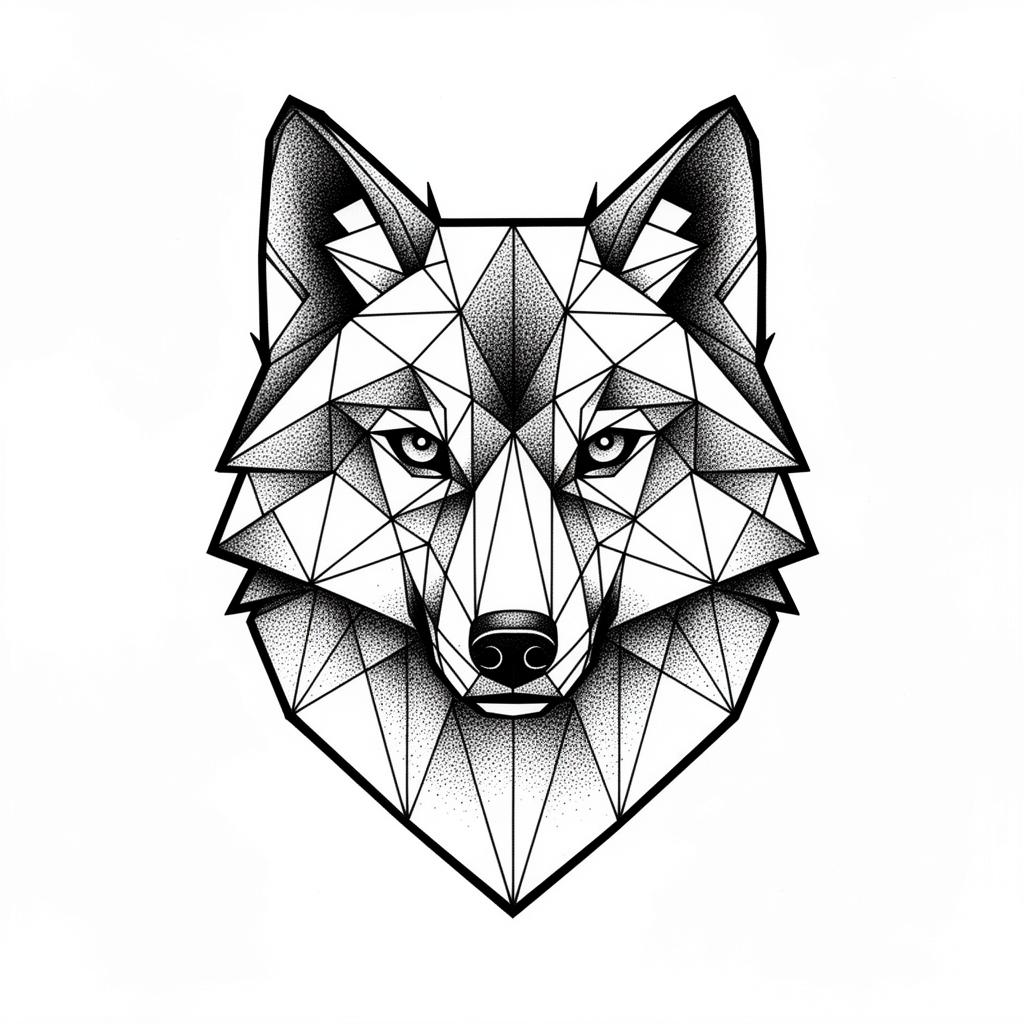
Geometric tattooing is where mathematics, sacred geometry, and tattoo art meet. The style draws on patterns that humans have found meaningful for thousands of years — the hexagon, the spiral, the Flower of Life, the mandala — and translates them into precise, body-aware compositions. What distinguishes geometric work is its insistence on accuracy: every line is intentional, every angle is measured, every shape closes exactly where it should.
The visual roots run deep. Sacred geometry appears in Hindu temples, Islamic tile work, Gothic cathedrals, and Buddhist mandalas — all seeking to express universal order through repeating shapes. Modern geometric tattooing inherits this lineage but adds contemporary elements: dotwork shading, blackwork fills, fine-line precision, and abstract pattern-based compositions that exist purely for their visual rhythm.
Geometric tattoos are uniquely demanding for the artist. A wobbly line in a freehand piece reads as character; a wobbly line in a geometric piece reads as a mistake. This is why the best geometric artists are often perfectionists with backgrounds in architecture, graphic design, or mathematical illustration. The reward is a tattoo that ages beautifully — clean shapes hold their integrity over decades in a way that detailed realism rarely matches. Prototype precise geometry with our tattoo design AI before locking in a final piece.
What Makes Geometric Tattoos Distinctive
Mathematical Precision
Every angle, line, and proportion in a geometric tattoo is measured. Artists often use stencils, rulers, and digital design tools to ensure perfect symmetry — and the human eye notices even tiny deviations.
Sacred Geometry Roots
Many geometric tattoos draw on patterns considered sacred across cultures — the Flower of Life, Metatron's Cube, mandalas, Sri Yantra. These designs carry spiritual weight beyond their visual appeal.
Body-Aware Composition
Strong geometric work flows with the body's natural geometry. A great artist will adjust the design's proportions so it reads correctly when the limb is at rest, in motion, and at every angle in between.
Pattern Over Subject
Unlike traditional tattoos, which are about iconic subjects, geometric work is often about pattern itself. The repetition of triangles, the precision of dotwork, the symmetry of a mandala — these are the subject.
Popular Geometric Tattoo Patterns
Geometric tattoos work from a vocabulary of shapes and patterns, often combined into complex, layered designs. Each pattern carries its own visual logic and symbolic resonance.
- Mandalas
- Circular designs radiating from a center point, found in Hindu and Buddhist traditions. Mandalas symbolize wholeness, the universe, and the self.
- Sacred Geometry
- The Flower of Life, Metatron's Cube, the Sri Yantra, and the Vesica Piscis — patterns used across millennia to represent universal order.
- Geometric Animals
- Wolves, lions, deer, owls, and foxes constructed from polygons. The animal silhouette is filled with triangular facets that read as a stylized portrait.
- Dotwork Compositions
- Shading and gradients built entirely from thousands of individual dots. Often combined with geometric outlines for textural contrast.
- Linework Patterns
- Repeating geometric motifs — chevrons, zigzags, parallel lines, optical illusions — applied across forearms, calves, and backs.
- Sacred Polygons
- Triangles, hexagons, pentagons, and platonic solids used as standalone pieces or as building blocks in larger compositions.
- Mountain and Landscape Geometrics
- Stylized mountain ranges, forests, and horizons rendered in clean geometric facets — popular for nature lovers and travelers.
- Glyphs and Sigils
- Custom symbolic shapes — runes, alchemical symbols, or original sigils — designed to encode personal meaning in geometric form.
Best Placements for Geometric Tattoos
Geometric tattoos demand placements with relatively flat planes where straight lines stay straight. Curved or highly-flexed body areas can distort the precise proportions that make geometric work compelling.
- Forearms
- The classic geometric canvas. Long, flat, and visible — perfect for sleeve compositions, mandalas, or geometric animals running the length of the arm.
- Upper Back and Shoulder Blades
- Large, mostly-flat surface ideal for ambitious mandalas, sacred geometry compositions, and symmetrical pieces that span the spine.
- Chest and Sternum
- Symmetrical placement perfect for centered mandalas, ornamental dotwork, and pieces that mirror across the body's vertical axis.
- Calves and Thighs
- Long flat areas suited to flowing geometric patterns, vertical mandalas, and decorative pattern bands.
Who Should Choose a Geometric Tattoo?
Geometric tattoos suit people drawn to precision, pattern, and design — engineers, architects, designers, and anyone who values clean visual logic. They're also a strong choice for collectors who want a piece that reads as art rather than imagery. If you appreciate symmetry, mathematical beauty, or sacred symbolism, geometric work delivers. If you want soft, painterly aesthetics, explore watercolor or fine-line styles instead.
Geometric Tattoo Designs — Community Gallery
Geometric Tattoo FAQ
Related Tattoo Styles
Dotwork Tattoos
Thousands of individual dots creating intricate patterns and shading. Dotwork tattoos are meditative, precise, and visually mesmerizing.
Explore DotworkBlackwork Tattoos
Solid black ink creating bold, graphic designs. From geometric patterns to illustrative work, blackwork tattoos are striking and timeless.
Explore BlackworkMinimalist Tattoos
Clean, simple designs with thin lines and minimal detail. Perfect for subtle, elegant tattoos that make a statement through restraint.
Explore MinimalistFine Line Tattoos
Delicate, precise linework creating intricate designs. Fine line tattoos use single-needle technique for ultra-thin, detailed artwork.
Explore Fine LineCreate Custom Geometric Tattoo Designs with AI
Use our free AI Tattoo Generator to create unique geometric designs in seconds. No artistic skills needed.