AI Japanese Tattoo Generator
Rich storytelling through koi fish, dragons, cherry blossoms, and waves. Japanese Irezumi features bold colors and flowing compositions.
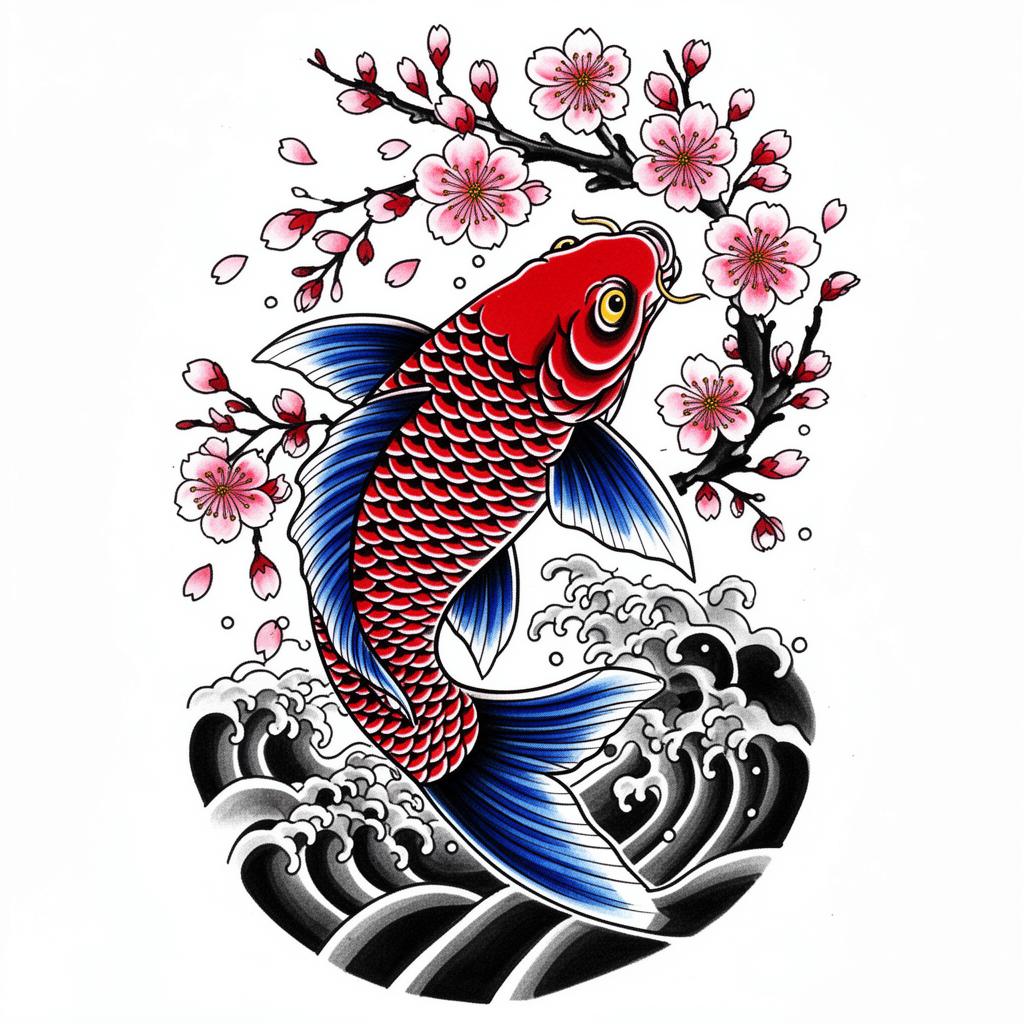
Japanese tattooing — known traditionally as Irezumi — is one of the oldest and most respected tattoo traditions in the world, with roots stretching back over a thousand years. What began as decorative body art in the Jomon period evolved through the Edo era (1603-1868) into the bold, narrative style we recognize today, when ukiyo-e woodblock artists began translating their prints onto skin.
What sets Japanese tattoos apart is the strict compositional logic. A traditional Irezumi piece isn't a collection of separate motifs — it's a unified scene where every element belongs. Background components like wind bars, water (mizu), clouds (kumo), and cherry blossom petals connect focal subjects into a flowing whole. This is why Japanese tattoos work so well as full sleeves, back pieces, and body suits — they're designed to wrap around the body's natural contours.
The motifs themselves carry deep symbolism drawn from Japanese folklore, Buddhism, and Shinto traditions. A koi swimming upstream represents perseverance and transformation. A dragon embodies wisdom and strength. Cherry blossoms remind us that beauty is fleeting. When you choose a Japanese tattoo, you're not just choosing imagery — you're tapping into centuries of layered meaning. Explore the AI-powered tattoo generator to create custom Japanese designs instantly.
What Makes Japanese Tattoos Unique
Narrative Composition
Every Japanese tattoo tells a story. Subjects are arranged with intention — a dragon coils because it must, water flows because the composition requires movement. Nothing is decorative for its own sake.
Bold, Saturated Color
Traditional Irezumi uses a confident color palette: deep reds, vivid blues, rich blacks, and golden yellows. Even modern Japanese-style work that goes black-and-grey keeps the high-contrast clarity that defines the tradition.
Flowing Backgrounds
Wind bars, waves, clouds, and falling petals aren't filler — they direct the eye, tie subjects together, and let the artwork move naturally with the body when you flex or turn.
Symbolic Depth
Each creature, flower, and weather element carries cultural meaning. A peony symbolizes wealth, a tiger represents protection, koi stand for determination. The choice of motif communicates something about the wearer.
Popular Japanese Tattoo Designs and Their Meanings
- Koi Fish (Carp)
- A symbol of perseverance, courage, and transformation. Legend says a koi that swims up the Dragon Gate waterfall becomes a dragon, making it a popular choice for those overcoming hardship.
- Dragon (Ryū)
- Wisdom, strength, and protection. Unlike Western dragons, Japanese dragons are benevolent guardians associated with water and rain.
- Cherry Blossom (Sakura)
- The beauty and brevity of life. Cherry blossoms bloom briefly and fall — a Buddhist reminder that nothing lasts.
- Tiger (Tora)
- Strength, courage, and protection from evil spirits and bad luck. Tigers ward off disease and demons in Japanese folklore.
- Phoenix (Hō-ō)
- Rebirth, fire, and the triumph of good over evil. Often paired with dragons to represent yin-yang balance.
- Peony (Botan)
- Wealth, prosperity, and elegance. Known as the "King of Flowers" in Japan, often paired with lions or tigers.
- Snake (Hebi)
- Protection, wisdom, and good fortune. White snakes are considered especially lucky and divine.
- Hannya Mask
- A jealous female demon from Noh theater representing the duality of human emotion — both terrifying and sorrowful.
Best Placements for Japanese Tattoos
Japanese tattoos shine on large canvases where the composition can breathe. The tradition was built around full body coverage, but modern Irezumi-style pieces work beautifully on smaller areas too — as long as the proportions respect the design's natural flow.
- Full Sleeves
- The classic canvas. A sleeve gives room for a complete scene with background, subject, and supporting motifs. Most traditional Japanese designs are conceived sleeve-first.
- Back Pieces
- The largest available canvas, ideal for ambitious compositions like a dragon and tiger battle, or a koi ascending a waterfall. Back pieces are the pinnacle of the Irezumi tradition.
- Chest Panels
- Often paired with sleeves to create a "body suit" feel. Symmetrical motifs like dual koi or facing dragons work particularly well here.
- Thighs and Calves
- Excellent for standalone pieces with strong vertical flow — a cherry blossom branch, a snake, or a single koi reading naturally up the leg.
Who Should Choose a Japanese Tattoo?
Japanese tattoos are for people who value meaning over minimalism and are willing to commit to a larger, longer-term piece. If you're drawn to storytelling, cultural depth, and bold visual impact — and you're prepared for multi-session work to do the style justice — Irezumi will reward you. If you want something small, subtle, or delicate, explore minimalist or fine-line styles instead. Japanese works best when given room to flow.
Japanese Tattoo Designs — Community Gallery
Japanese Tattoo FAQ
Related Tattoo Styles
Traditional Tattoos
Bold outlines, vivid colors, and iconic imagery. American traditional tattoos feature classic motifs like anchors, roses, and eagles.
Explore TraditionalNeo-Traditional Tattoos
A modern evolution of traditional tattoos with richer color palettes, more complex compositions, and detailed shading techniques.
Explore Neo-TraditionalWatercolor Tattoos
Vibrant splashes of color mimicking watercolor paintings. These tattoos break traditional boundaries with flowing, painterly effects.
Explore WatercolorBlackwork Tattoos
Solid black ink creating bold, graphic designs. From geometric patterns to illustrative work, blackwork tattoos are striking and timeless.
Explore BlackworkCreate Custom Japanese Tattoo Designs with AI
Use our free AI Tattoo Generator to create unique japanese designs in seconds. No artistic skills needed.