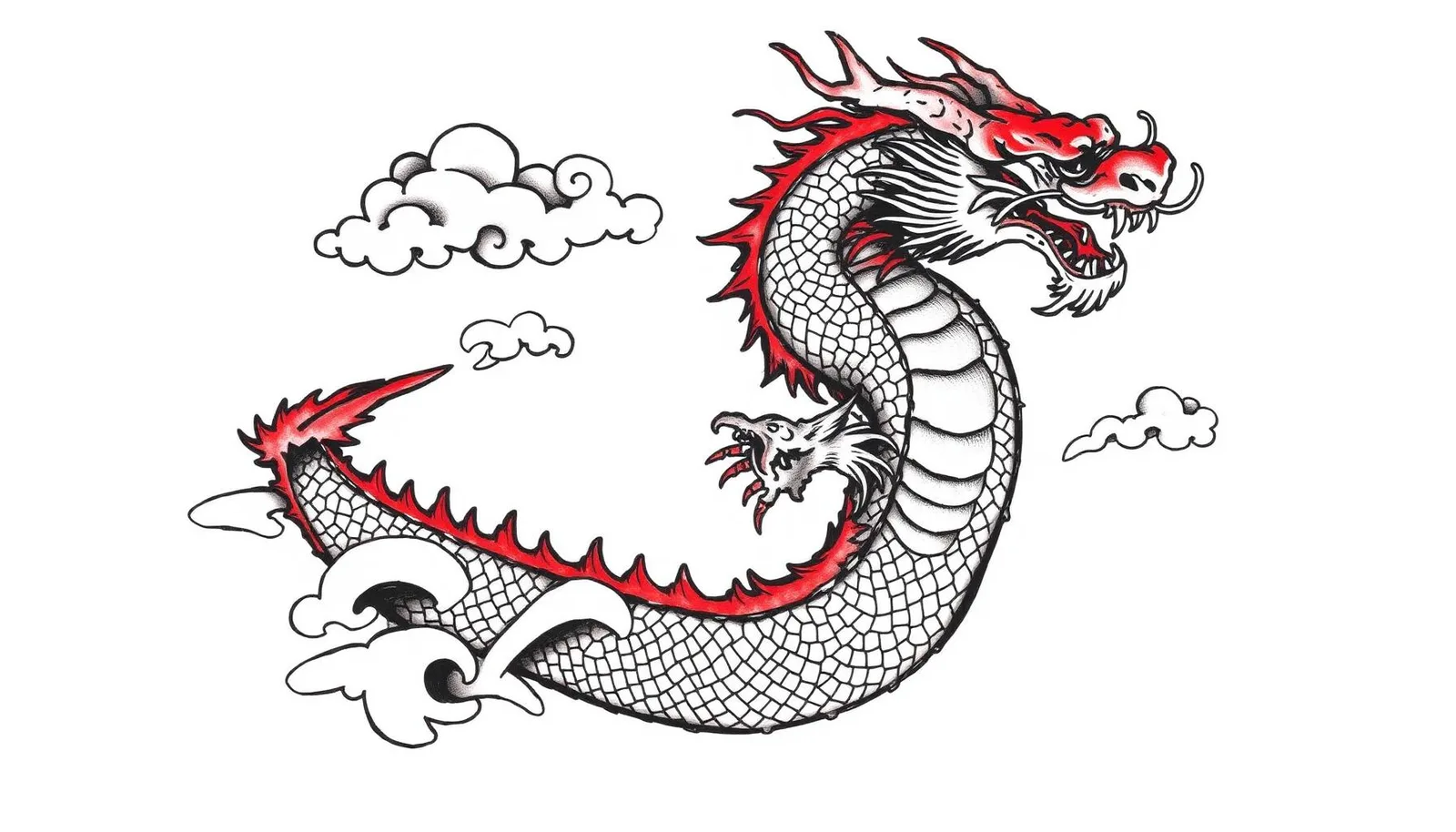
The dragon may be the single most loaded tattoo subject in the world. No other creature carries such different — sometimes contradictory — meanings across cultures. In East Asia, dragons are benevolent water spirits associated with wisdom, imperial power, rain, and rivers. In medieval Western tradition, dragons are fire-breathing adversaries to be slain by heroes, symbols of greed, chaos, and primal threat. A dragon tattoo always answers a fundamental question first: which dragon?
Eastern dragons (lóng in Chinese, ryū in Japanese) are long, serpentine, and elemental. They have no wings yet fly through clouds. They embody balance, strength tempered by wisdom, and the power that comes from being aligned with natural forces. Western dragons are reptilian and winged — the dragons of European heraldry, Norse legend, and Christian iconography. They symbolize raw power, often menacing, sometimes guarding treasure, sometimes embodying evil to be defeated.
Modern dragon tattoos draw from both traditions and increasingly mix elements freely. A skilled artist can render a dragon that captures whichever symbolism you want — protective wisdom, fierce strength, or simply the beauty of one of mythology's most enduring creatures. The choice of which tradition you reference shapes everything: composition, color palette, anatomy, and the emotional register of the finished piece. Use our free AI tattoo generator to instantly mock up dragon concepts in any style before your appointment.
What Dragon Tattoos Symbolize
Dragon symbolism splits along an East-West axis but shares some universal threads. In every tradition, dragons represent power — the question is what kind. Eastern dragons embody constructive power: rain that nourishes crops, rivers that sustain life, wisdom that guides rulers. Western dragons embody destructive power: fire that consumes, hoards that corrupt, threats that test heroes.
Both traditions agree that dragons are intelligent. Unlike other large mythological creatures, dragons in nearly every culture think, plan, and exercise judgment. This is part of why dragon tattoos suit people who value intelligence and strategic thinking — the dragon isn't just strong, it's wise.
Wisdom and Power Combined
The Eastern interpretation. A dragon tattoo emphasizing flowing form, peaceful expression, or association with water and clouds typically reads as a symbol of wisdom married to strength — the kind of power that doesn't need to dominate to be respected.
Protection and Guardianship
Both traditions include dragons as protectors. Chinese imperial dragons guarded emperors; Norse dragons guarded treasures and ancestral mounds. A dragon tattoo positioned protectively around the body — chest, back, wrapping a limb — often reads as a personal guardian.
Strength and Fierceness
The Western interpretation. A dragon with bared teeth, breathing fire, or in aggressive posture symbolizes raw, untamed strength. Often chosen by people who want a tattoo that signals power without subtlety.
Transformation and Renewal
In several traditions, dragons are associated with transformation — the koi that becomes a dragon by swimming up the Dragon Gate waterfall, the dragons that shed skin like serpents. Dragon tattoos with transformation themes (koi-to-dragon compositions, shedding scales, emerging-from-water imagery) emphasize personal growth and rebirth.
Cultural Meanings Across Traditions
Dragon meaning varies dramatically by culture, more so than almost any other tattoo subject. Choosing a tradition you connect with — by heritage, deep study, or genuine affinity — adds authenticity to the piece. Surface-level borrowing of cultural symbolism can read as appropriation; thoughtful engagement reads as respect.
Chinese Dragon (Lóng)
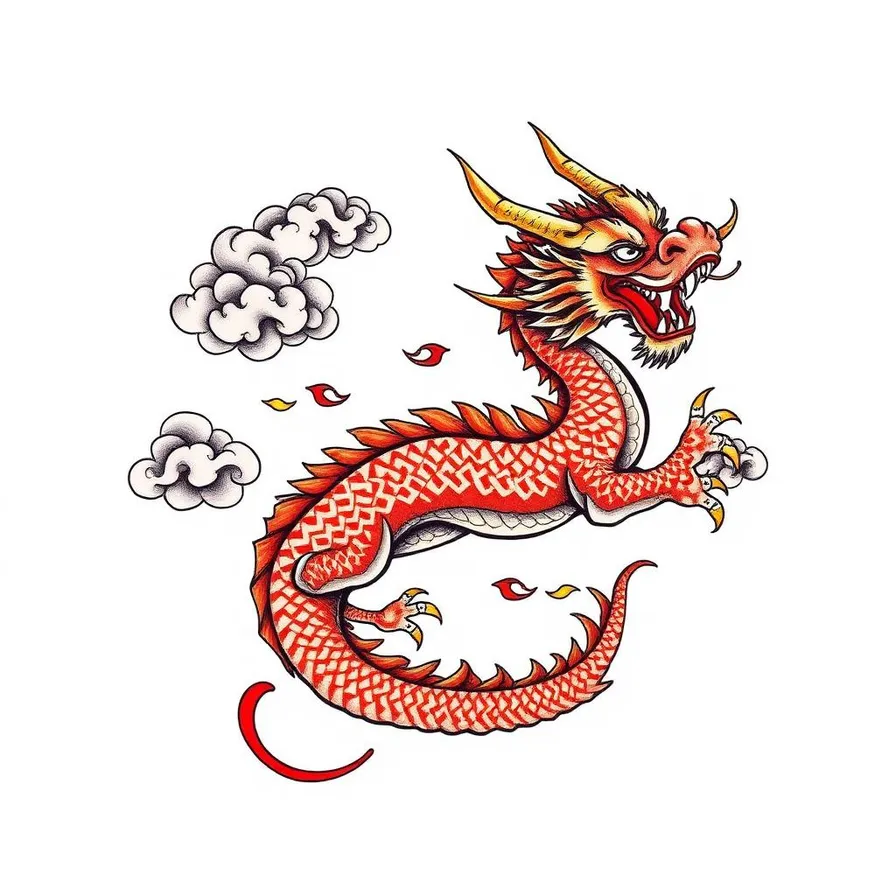
The Chinese dragon is the most influential dragon archetype globally. Long and serpentine with four legs and no wings, the lóng has been associated with imperial power for millennia — emperors were said to sit on the "dragon throne." Chinese dragons control water (rain, rivers, seas) and represent yang energy, masculine power, fortune, and the supreme natural order. Five-clawed dragons were reserved for emperors; four-clawed for nobility; three-clawed for commoners.
Japanese Dragon (Ryū)
Japanese dragons share Chinese ancestry but evolved distinct characteristics. The ryū is closely associated with water — sea dragons, river dragons, lake dragons. In Buddhist tradition, dragons protect the dharma. Japanese dragon tattoos are core motifs in Irezumi (traditional Japanese tattooing), often paired with tigers (yin-yang balance), koi (transformation), or against backgrounds of waves and clouds. They have three claws, distinguishing them from Chinese dragons.
Western and European Dragons
The Western dragon tradition is largely adversarial. From Beowulf's dragon to Tolkien's Smaug, dragons in European tradition guard treasures, threaten kingdoms, and serve as challenges for heroes. They're winged, reptilian, fire-breathing. Christian symbolism casts dragons as embodiments of evil — Saint George slays a dragon; the Book of Revelation features the great red dragon. Dragon tattoos in Western styles often emphasize this fierce, threatening aspect.
Norse Dragons (Dreki and Lindworm)
Norse mythology includes specific dragon types: Níðhöggr, the dragon gnawing at the world tree's roots; Fáfnir, the cursed dwarf-turned-dragon slain by Sigurd. Norse dragons are typically wingless serpents (lindworms) or specifically named beasts in mythology rather than a generic species. Norse dragon tattoos often pair with runic elements and Viking imagery.
Welsh and Celtic Dragons
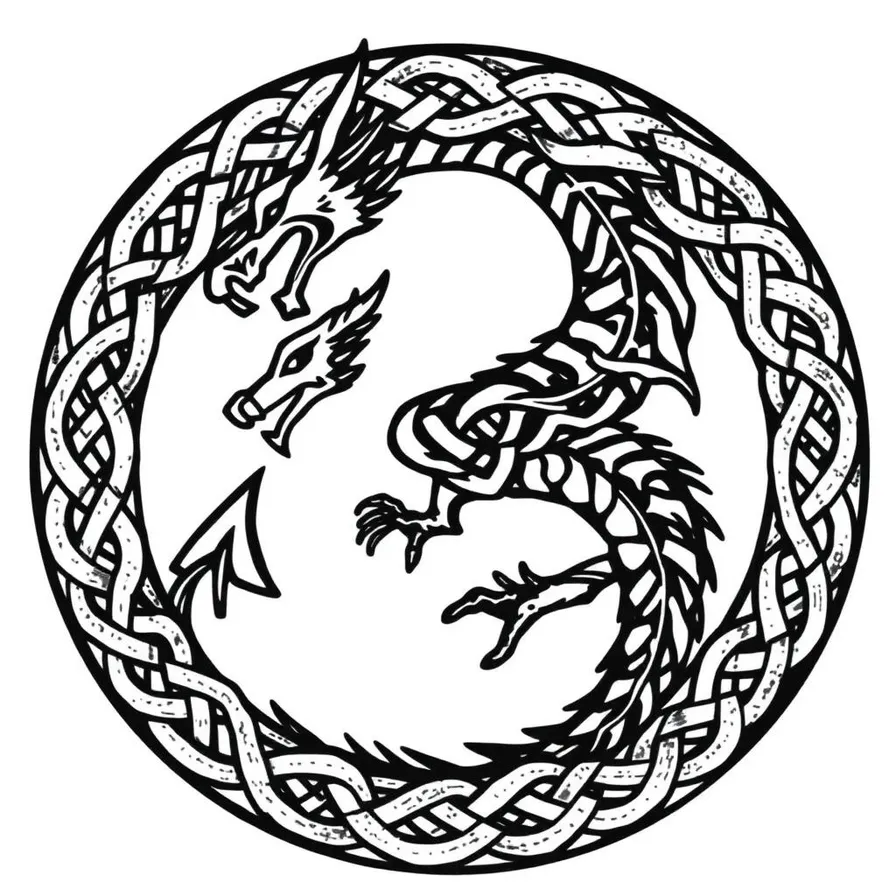
The red dragon of Wales (Y Ddraig Goch) appears on the Welsh flag and in Arthurian legend. Celtic dragon symbolism is more positive than broader European tradition — Celtic dragons represent sovereignty, the land's protective spirit, and the union of opposing forces. Celtic-knot dragon designs combine the dragon with eternal-loop imagery.
Popular Dragon Tattoo Variations
- Eastern Sleeve Dragon
- A long, serpentine dragon coiling around an arm or leg, often with cloud and wave backgrounds. The classic Japanese irezumi composition. Most ambitious dragon tattoo format.
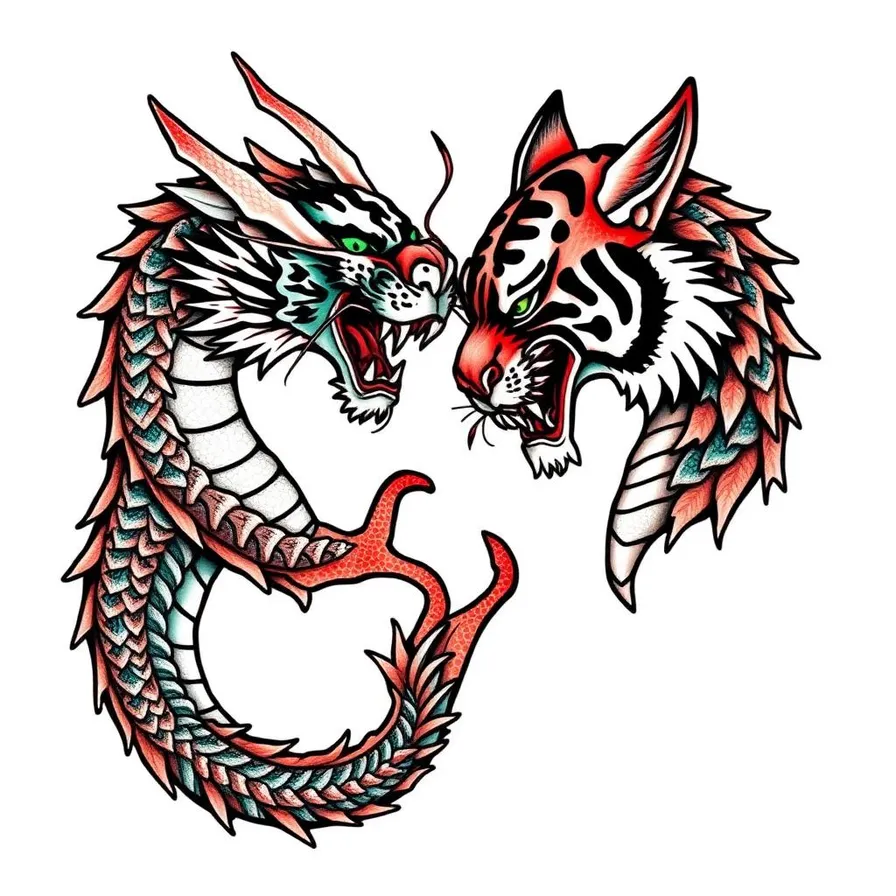
- Dragon and Tiger
- Yin-yang pairing in Japanese tradition: dragon as celestial wisdom, tiger as earthly power. Often rendered as facing-off or balancing compositions.
- Dragon and Phoenix
- Another classic pairing: dragon as masculine yang, phoenix as feminine yin. Symbolizes balance and wholeness.
- Koi-to-Dragon Transformation
- Composition showing koi mid-transformation into a dragon, capturing the legend of the Dragon Gate. Symbolizes perseverance leading to transcendence.
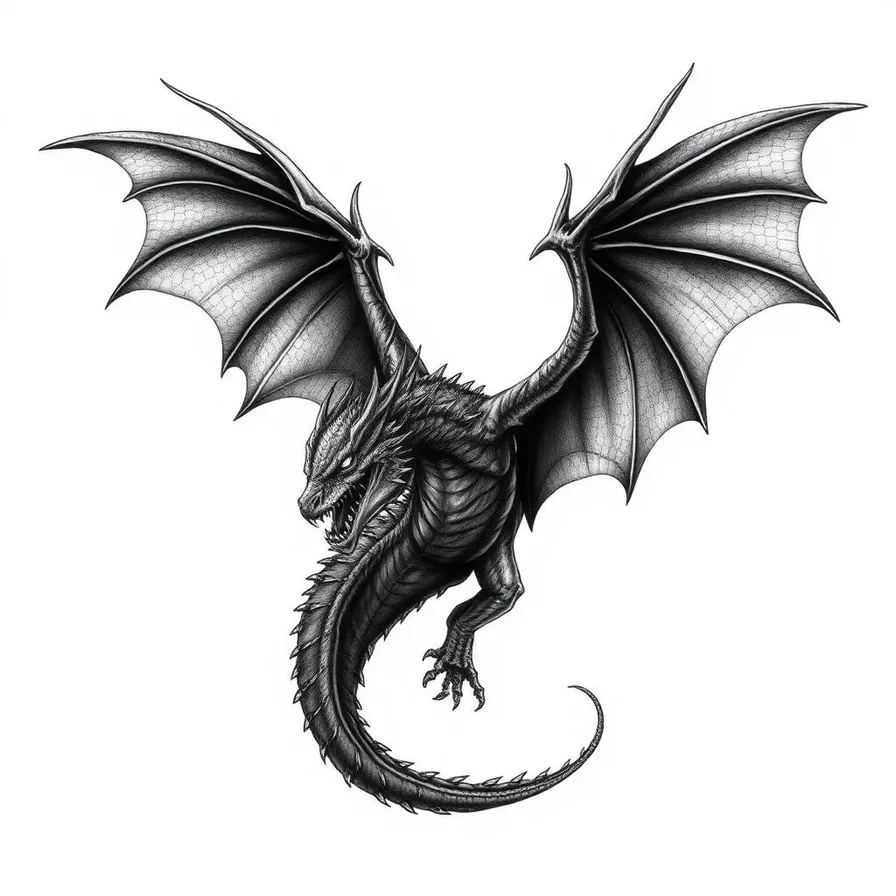
- Western Dragon with Wings
- Fire-breathing, winged dragon in heraldic or fantasy style. Evokes Western dragon tradition: power, threat, treasure-guardian energy.
- Dragon Skull
- Just the dragon's skull, often with horns and teeth detailed. Memento mori meets dragon symbolism — power and mortality together.
- Tribal Dragon
- Bold black-ink dragon in tribal/Polynesian style, emphasizing bold patterns over realistic anatomy. Strong graphic impact.
- Celtic Knot Dragon
- Dragon body formed from interlocking Celtic knotwork. Pairs dragon symbolism with the eternal-loop motif of Celtic ornamentation.
Best Tattoo Styles for Dragons
Dragons work in nearly every tattoo style, but certain styles capture certain dragon traditions better than others. Choose the style that matches the cultural and emotional register you want.
- Japanese / Irezumi
- The natural home for Eastern dragons. Bold outlines, saturated color, flowing compositions with clouds and waves. The traditional way to render a serpentine ryū.
- Realism
- For photorealistic Western dragons with detailed scales, anatomy, and atmospheric scenes. Best for dragon portraits or close-up dragon imagery.
- Blackwork
- Bold graphic dragons with solid black fills. Works for both Eastern stylized dragons and Western heraldic dragons. Excellent longevity.
- Neo-Traditional
- Ornamental dragons with rich jewel-tone color and decorative elements. Good middle ground between traditional Western dragons and contemporary illustration.
Best Placements for Dragon Tattoos
Dragons rarely work in small placements. The serpentine form of Eastern dragons demands flowing space; the wingspan of Western dragons demands width. Most serious dragon tattoos are sized large from the start.
- Sleeve and Half-Sleeve
- The classic dragon canvas. The arm's length suits Eastern dragons that wrap and flow naturally; the width suits Western dragons that need wing space.
- Back and Back Piece
- The pinnacle of dragon tattoo placement. Allows full-body dragon compositions, dragon-and-phoenix pairings, dragon-and-tiger battles. Reserved for major projects.
- Chest and Pectoral
- Often paired with sleeves for dragon "body suit" compositions. Symmetrical placements suit dual dragons or dragon-phoenix pairs.
- Thigh
- Excellent for standalone vertical dragon compositions. The leg's length suits a single dragon in flowing motion; mostly covered for those wanting visual impact without daily visibility.
Who Should Choose a Dragon Tattoo?
Dragon tattoos suit people who value strength, wisdom, transformation, or protection — and who want body art with serious cultural and visual weight. They're ideal for collectors planning ambitious large-scale work, people drawn to specific cultural traditions (Chinese, Japanese, Norse, Welsh), and anyone who wants a tattoo that operates on multiple symbolic layers. Be ready for the time and cost commitment of a serious dragon piece. If you want similar symbolic depth at smaller scale, consider wolf tattoo ideas or lion tattoo ideas. If you want a more delicate or floral subject, explore rose tattoo ideas or butterfly tattoo ideas.
Frequently Asked Questions
No time to design?
Let AI create your tattoo in seconds.
Ready to Create Your Own Dragon Tattoo Tattoo?
Generate a custom AI tattoo design in seconds — no signup needed to preview.
Related Tattoo Ideas
Wolf Tattoo Ideas
Bold, symbolic wolf tattoo designs representing loyalty, strength, and independence.
Lion Tattoo Ideas
Majestic lion tattoo designs symbolizing courage, royalty, and leadership.
Skull Tattoo Ideas
Iconic skull tattoo designs representing mortality, rebellion, and the celebration of life.