Minimalist vs. Fine Line: A Tale of Two Tattoos
At first glance, minimalist and fine line tattoos might seem like siblings. They both champion a certain delicate, understated elegance that stands in stark contrast to bolder, more traditional styles. You’ll often see them mentioned in the same breath, celebrated for their subtlety and modern appeal. However, to group them together is to miss the nuanced artistry that defines each one. They are more like cousins with distinct personalities, each with its own philosophy, technique, and ideal application.
One is about subtraction and essence; the other is about addition and detail. Understanding this core difference is the key to choosing the style that will not only look good on your skin but will also resonate with your personal aesthetic for years to come. Are you drawn to the power of a simple, symbolic statement, or do you crave intricate, whisper-thin details that invite a closer look? This guide will walk you through everything that separates—and sometimes connects—these two powerhouse styles, so you can make an informed choice for your next piece of body art.
The Essence of Minimalist Tattoos
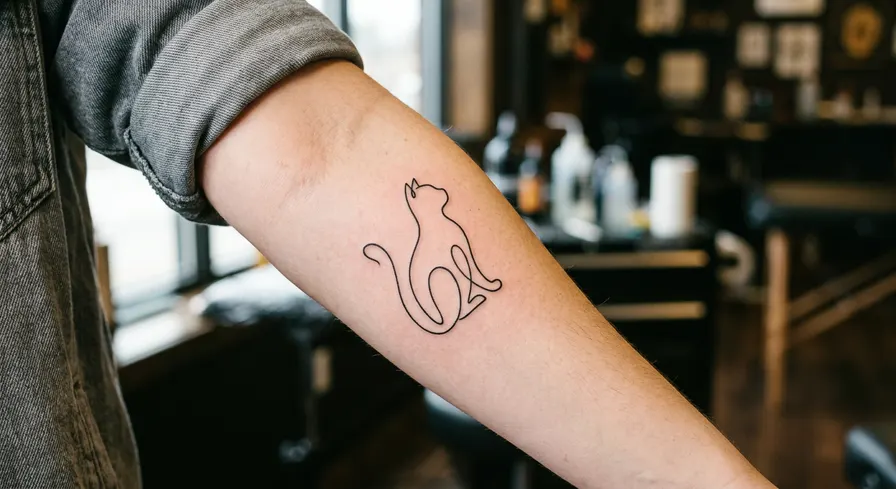
Minimalism, as a philosophy, is about stripping things down to their essential elements. A minimalist tattoo is the perfect embodiment of this "less is more" approach. It’s not about a lack of meaning, but rather, conveying that meaning with the utmost simplicity and clarity. These tattoos make a statement not with loud colors or complex shading, but with clean lines, basic forms, and a deliberate use of negative space. The skin itself becomes an integral part of the design.
Think of a single, continuous line that forms an animal, a tiny geometric shape on a wrist, or a simple planetary symbol. The goal isn’t to replicate a subject photorealistically, but to capture its spirit or outline. Our extensive guide to **minimalist tattoos** dives even deeper into the style's origins and variations. These designs are often abstract, symbolic, and deeply personal. They feel intentional and uncluttered, proving that a powerful message doesn't require a large or complicated canvas. It’s a quiet, confident style that values precision over intricacy.
Defining the Delicate Art of Fine Line Tattoos
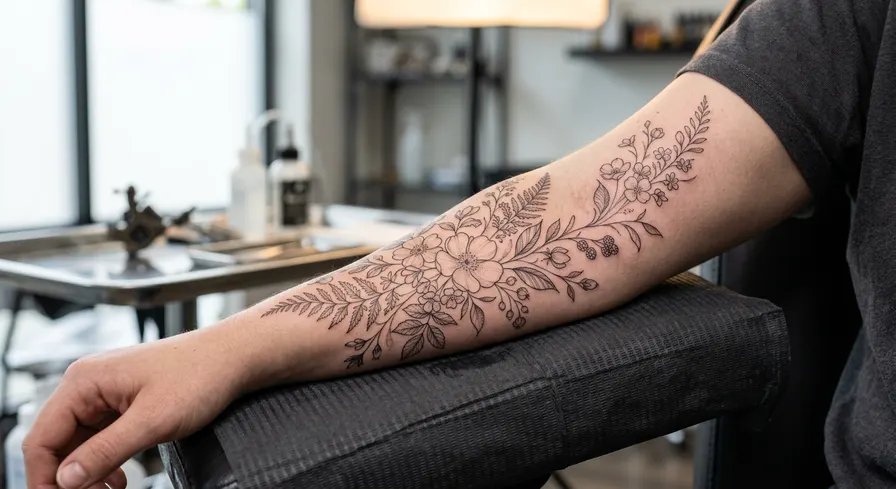
While often delicate, fine line tattoos are fundamentally defined by their technique, not just their simplicity. This style is all about creating highly detailed and intricate designs using single needles or very small needle groupings (like a 3RL). Where a minimalist tattoo subtracts, a fine line tattoo often adds. It uses thin, precise lines to build up complex imagery, from soft, subtle shading to intricate patterns that would be impossible with a thicker needle. The result is artwork that can look like it was drawn on the skin with a technical pen.
This technique allows artists to achieve a remarkable level of detail in a small space. Think of detailed floral bouquets, hyper-realistic portraits, or elaborate script. While a minimalist piece is about the "idea" of a flower, a **fine line tattoo** can capture the delicate veins on each petal. It is a versatile technique that can be applied to many different aesthetics, but it will always be characterized by its precision, delicacy, and intricate detail. It’s a style for those who appreciate masterful craftsmanship and want their tattoo to be a piece of intricate art.
Key Differences at a Glance
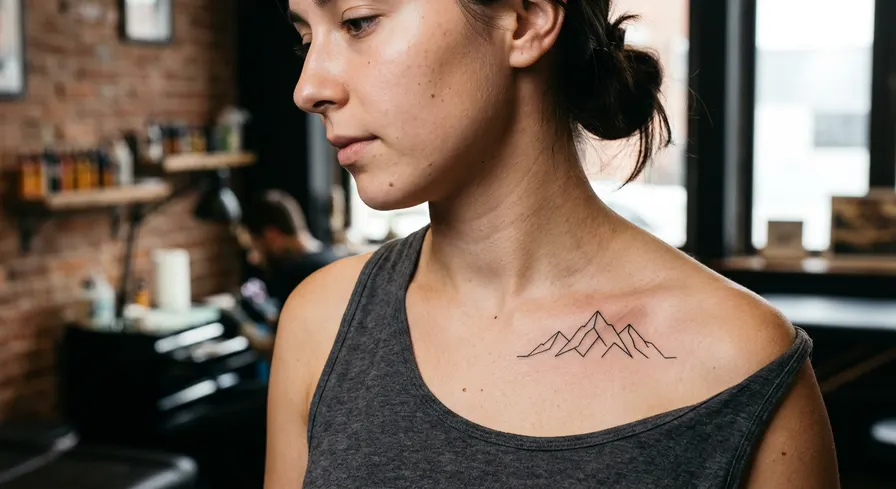
While both styles can be small and subtle, their underlying goals and execution are worlds apart. Understanding these differences in complexity, technique, and philosophy is crucial for aligning a tattoo with your vision.
Complexity and Detail
The most significant distinction lies in the level of detail. Minimalist tattoos are intentionally simple. They use basic lines and shapes to create a stylized or symbolic representation. The beauty is in its clean, uncluttered nature. A mountain range might be reduced to a single, sharp, geometric line, capturing its essence without detailing every peak and valley.
Fine line tattoos, conversely, are all about detail. That same mountain range in a fine line style could include tiny trees, subtle shading to indicate shadows, and texture on the rock faces. This style’s strength is its ability to render complex subjects—like portraits, intricate botanicals, or architectural drawings—with stunning precision. It aims for a higher level of realism or decorative complexity, using thin lines as its building blocks.
Needle Usage and Technique
The name "fine line" points directly to its technique: the use of a single needle or a small grouping of needles. This is what allows artists to create such crisp, thin, and detailed work. The process can be slower and requires an extremely steady hand, as every tiny movement is visible.
Minimalist tattoos don’t adhere to a single-needle rule. While some very thin minimalist designs might use one, many are created with standard 3, 5, or even 7 Round Liners (3RL, 5RL, 7RL) to create a slightly thicker, more robust line that will stand the test of time. The focus isn't on using the smallest needle possible, but on creating a clean, solid, and simple line appropriate for the design.
Design Examples: Symbolism vs. Intricacy
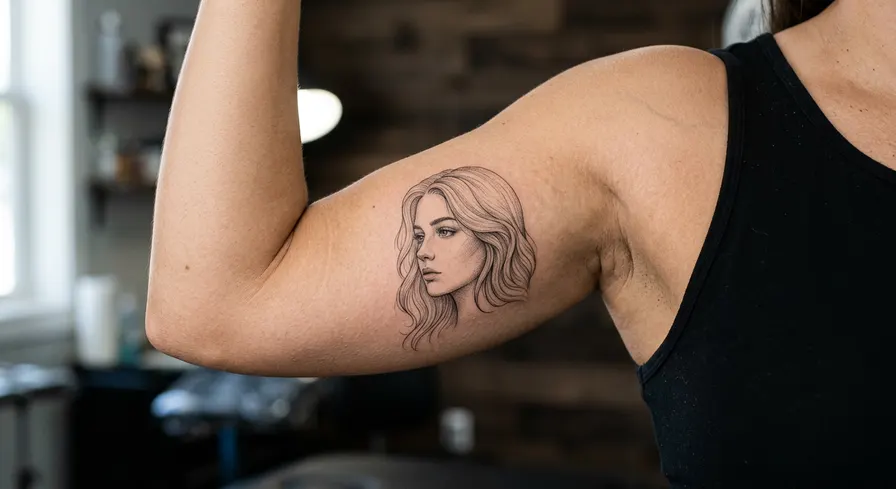
Seeing the styles side-by-side makes their differences click. For minimalist tattoos, think of popular motifs like a small wave, a crescent moon, a paper airplane, or the outline of a heart. They are often symbolic and serve as a small, personal reminder. Another popular sub-genre is single-line tattoos, where a whole image is created using one continuous, unbroken line. Many designs lean into **geometric** forms, using perfect circles, triangles, and straight lines to create balanced and simple compositions.
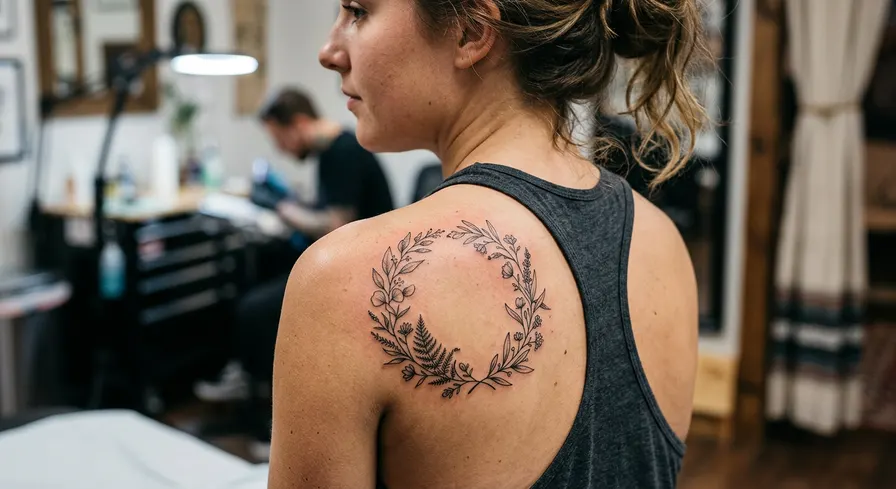
Fine line examples showcase the style's versatility and detail. This is where you’ll find those stunningly realistic pet portraits, delicate floral wreaths wrapping around a shoulder, or famous paintings recreated in miniature. Its ability to create soft shadows and textures also makes it a popular choice for **realism** tattoos executed on a smaller scale. Designs often feature a high density of lines and information, creating a rich and detailed piece that draws the eye in for a closer look.
The Aging Process: How Will They Look in 10 Years?
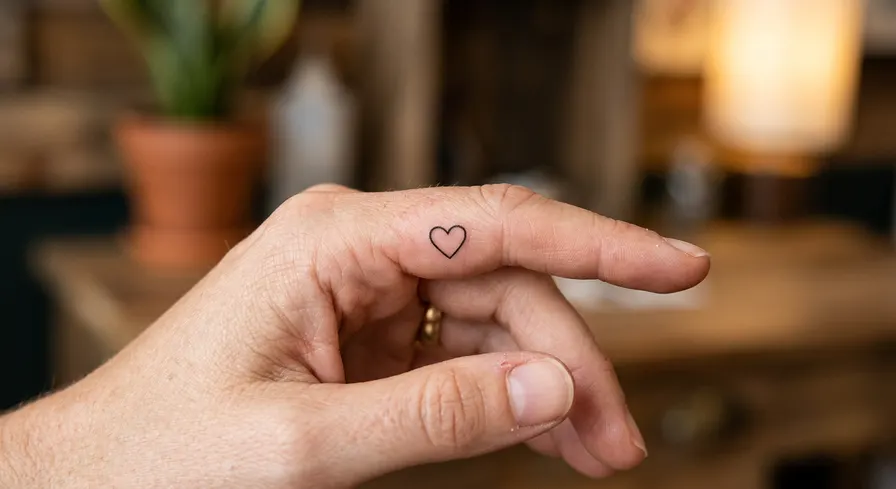
Longevity is a critical factor in any tattoo decision. All tattoos fade and spread over time as ink particles are broken down by the body and skin ages. However, the style can influence how gracefully this process unfolds. For minimalist tattoos with clean, solid lines of a reasonable thickness, the aging process is generally very kind. A simple, bold line has room to soften and spread slightly over decades without losing its integrity. However, for extremely thin minimalist designs—those that mimic the fineness of a single-needle piece—the risks are similar.
Fine line tattoos are more vulnerable to the effects of time. Because the details are so small and the lines are so close together, there is a higher risk that they can blur and merge over the years, causing intricate details to become muddy. Furthermore, a very fine line has less pigment packed into the skin, making it more susceptible to fading from sun exposure. This makes two things essential: choosing an artist with proven experience in healed fine line work, and diligent, lifelong sun protection to keep the lines as crisp as possible for as long as possible.
Pain and Healing Considerations
Does a more delicate tattoo mean less pain? Not necessarily. Pain is subjective and location-dependent, as our **tattoo pain chart** clearly shows, but we can make some generalizations. A simple minimalist tattoo is often very quick to execute. A small outline might take only a few minutes, leading to a brief and manageable experience. The sensation is often described as a sharp, clean scratch.
A fine line tattoo, especially a detailed one, can involve a longer session. The artist moves more slowly and meticulously, and may go over areas multiple times to build up shading and detail. While the single needle isn't inherently more painful per second, the prolonged irritation in one area can lead to a higher overall pain level for many people. It feels more like a persistent, lighter scratching. In terms of healing, both styles require diligent aftercare. The fine, delicate lines can be more fragile during the healing process, so it's crucial to avoid friction and soaking to ensure the ink settles perfectly.
Cost Comparison: Is Simpler Always Cheaper?
You might assume that a smaller, simpler minimalist tattoo would automatically be cheaper than a detailed fine line piece, but it’s not that straightforward. All reputable tattoo shops have a "shop minimum" cost, typically ranging from $80 to $200. This covers the cost of sterile, single-use equipment, the artist's time for setup and breakdown, and the tattoo itself. Many small minimalist tattoos will fall under this minimum charge, so a tiny heart won't cost $20, it will cost whatever the shop minimum is.
Fine line tattoos are often priced higher, not necessarily because of size, but because of the skill and time involved. An artist who specializes in single-needle work has honed a very specific, difficult craft, and their hourly rate will reflect that expertise. A small, two-inch floral piece packed with fine line detail could easily take two hours and cost significantly more than a simple, palm-sized minimalist outline that takes 20 minutes. As we break down in our article on **how much tattoos cost**, you are paying for time and expertise, not just square inches of ink.
Which Style Is Right For You?
Ultimately, the best style is the one that aligns with your aesthetic and the specific design you have in mind. Neither is inherently better—they simply serve different artistic purposes.
You should lean towards a minimalist tattoo if you want a piece that is symbolic rather than literal, you value simplicity and clean space, or you want a discreet and subtle design. They are often a fantastic gateway for those getting their first piece, and our list of **small tattoos for women** has some great examples. Their timeless, uncluttered nature makes them easy to love for a lifetime.
You should opt for a fine line tattoo if your design idea is intricate and detailed, you are drawn to realistic or delicate imagery, or you want a piece that looks like a technical drawing or a soft pencil sketch. This style lives and dies by the artist’s skill, so your primary focus should be finding a true specialist with a strong portfolio of healed work. For more ideas, explore our complete **tattoo styles guide** to see how fine line techniques are used across different genres.
Before you commit, use a tattoo generator to experiment with your idea in both styles. Seeing a visual representation can instantly clarify which aesthetic speaks to you more. It allows you to see your concept as both a simple, bold statement and an intricate, detailed illustration, ensuring you have no regrets when you finally sit in the artist's chair.
Frequently Asked Questions
Ready to Create Your Own Design?
Generate a custom AI tattoo design in seconds — no signup needed to preview.
Related Articles
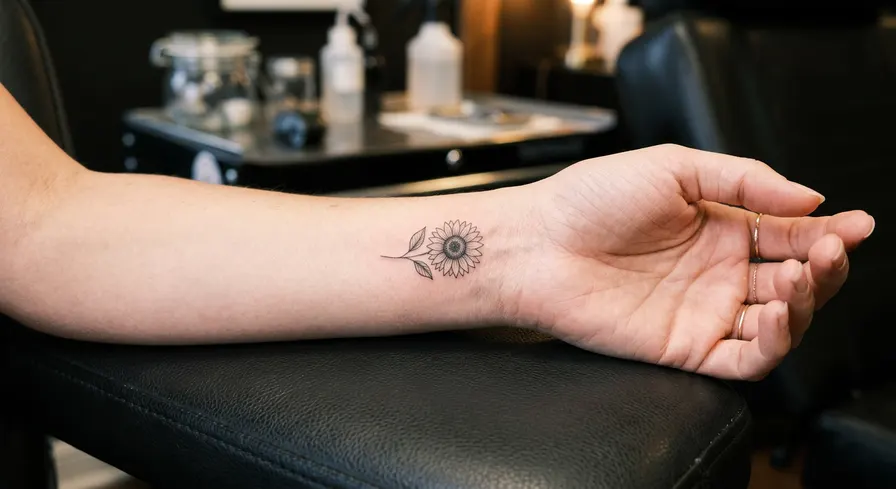
50 Small Tattoo Ideas for Women — Minimalist & Meaningful
Thinking about getting a small and meaningful tattoo? Explore our curated list of over 50 elegant, minimalist, and deeply personal small tattoo ideas for women.
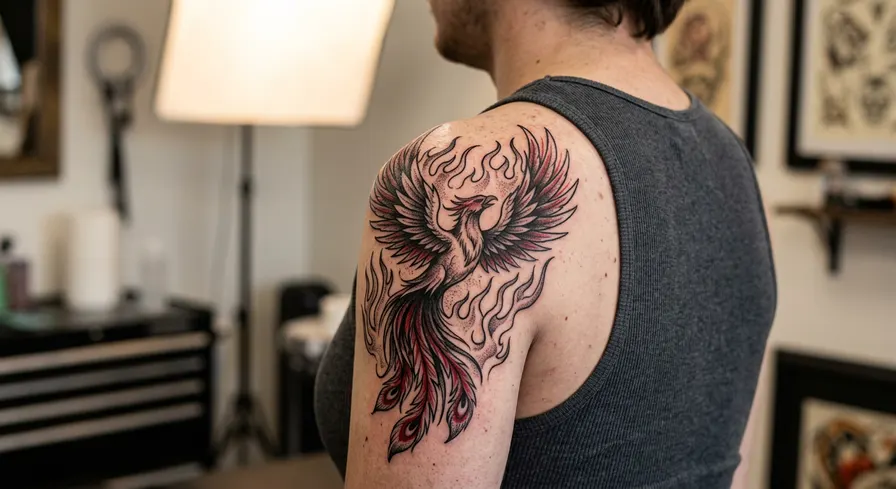
40 Meaningful Tattoo Ideas with Symbolism Explained
Choosing a tattoo is a journey into personal expression, and our guide to meaningful tattoo ideas explains the symbolism behind powerful designs.